
Madhya Pradesh, India
Dhar
Explore the historical wonders, local food, and cultural highlights of Dhar.
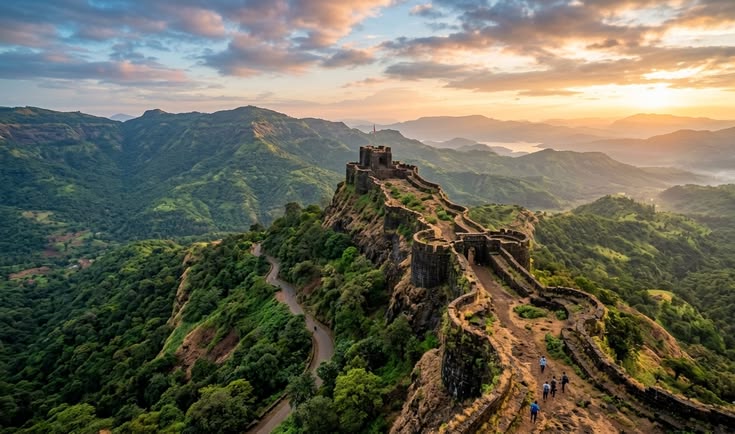
Travel to Dhar: History, Culture and Places of Interest
History of Dhar
Dhar, located in the state of Madhya Pradesh, India, has historically been a city of great cultural and political importance from ancient times to the modern era. Known as Dhar Nagari in ancient times and as Piran Dhar during the medieval period, the city served as the capital of several powerful kingdoms.
Paramara Dynasty
From the 9th to the 13th centuries, the region was ruled by the Paramara dynasty, whose kingdom extended across much of Malwa. Two of its most celebrated monarchs were Vakpati Munja and Raja Bhojadeva.
- Munja was a brilliant military strategist, poet and patron of the arts. He promoted literature at his court, which welcomed renowned poets such as Padmagupta, author of Navasahasankacharita.
- Bhojadeva, the most famous of the Paramaras, is remembered as a great king, scholar and author. He is credited with works on grammar, astronomy, architecture and literature. He founded Bhojashala, a centre of Sanskrit learning dedicated to the goddess Saraswati, and built the impressive Bhojpur Temple and a large lake nearby.
Delhi Sultanate and Kingdom of Malwa
In 1305, Dhar was conquered by Alauddin Khalji of the Delhi Sultanate. Later, in 1401, Dilawar Khan Ghuri, the governor of Malwa, declared independence and established Dhar as his capital.
His son, Hoshang Shah, later moved the capital to Mandu, where he was buried in a magnificent mausoleum.
The city passed through the hands of several rulers until the arrival of the Mughals. During the reign of Baz Bahadur, the last independent Sultan of Malwa, the romantic story of Baz Bahadur and Rani Roopmati became a legendary tale. When the Mughals invaded the region, Roopmati chose death rather than being captured.
Mughal and Colonial Era
During the Mughal Empire, Dhar was part of the Subah of Malwa under Emperor Akbar. Akbar visited Dhar and Mandu during his campaigns towards the south.
Jahangir, another Mughal emperor, also spent a considerable period in Mandu and left favourable descriptions of its climate and landscapes.
In 1832, Dhar was handed over to Anand Rao Pawar as part of the reorganisation of Malwa by the Peshwas.
During the Rebellion of 1857, Dhar became a centre of resistance against British rule. The rebels captured the fort and resisted until the end of October. However, the city was recaptured by British troops under the command of Colonel Durand. Dhar was subsequently annexed but was returned to the Pawars in 1860.
Places of Interest in Dhar
Dhar is rich in historical heritage and features several important monuments and attractions.
- Dhar Fort: Offers panoramic views of the city.
- Bhojashala: An ancient centre of Sanskrit learning featuring historical inscriptions.
- Kamal Maula Mausoleum: The tomb of a Sufi saint.
- Temples and Mosques: Include Kali Mata Mandir, LADH Masjid, Man-Tung-Giri (Jain Tirtha), Bandichod Dargah, Bada Ganpati Mandir, Vijay Mandir and Nityanand Ashram.
- Dhar Archaeological Museum (Puratatva Sangrahalay): Houses various historical artefacts from the region.
Mandu: The City of Joy
A few kilometres from Dhar lies Mandu, a famous tourist destination known for its natural beauty and medieval architecture.
Surrounded by lush vegetation, rivers and hills, Mandu is home to palaces, mosques, pavilions and mausoleums that reflect its glorious history.
Bagh Caves
Located along the banks of the Bagh River are the impressive Bagh Caves, which were carved into the rock between the 5th and 7th centuries AD.
Their mural paintings are considered among the finest expressions of Indian Buddhist art, alongside the famous paintings of Ajanta.
Culture and Demographics
According to the 1991 census, Dhar district had a population of approximately 1,367,412. The current population is considerably larger. The region is characterised by great cultural and linguistic diversity.
Tribal Population
A significant part of the population belongs to Scheduled Tribal communities, among which the Bhils and Bhilalas are particularly prominent, especially in the Kukshi Tehsil region.
Languages
Several languages and dialects are spoken in Dhar, including:
- Hindi
- Malvi
- Marathi
- Urdu
- Gujarati
- Marwari
- Nimadi, particularly in areas near West Nimar
How to Reach Dhar
By Air
The nearest airport is Indore Airport, which has flights to Delhi, Mumbai, Gwalior and Bhopal.
By Train
The most convenient railway stations are Ratlam and Indore, both of which are well connected by rail to various parts of India.
By Road
Dhar has good road connections with cities such as Indore, Mandu, Mhow, Ratlam, Ujjain and Bhopal, with frequent bus services.
Plan Your Trip
Get a bespoke itinerary in 24 hours.
Need Help? We Are Here To Help You
We Can Tailor-Make a Special Itinerary For You. Contact our specialists directly.