
Madhya Pradesh, India
Jabalpur
Explore the historical wonders, local food, and cultural highlights of Jabalpur.
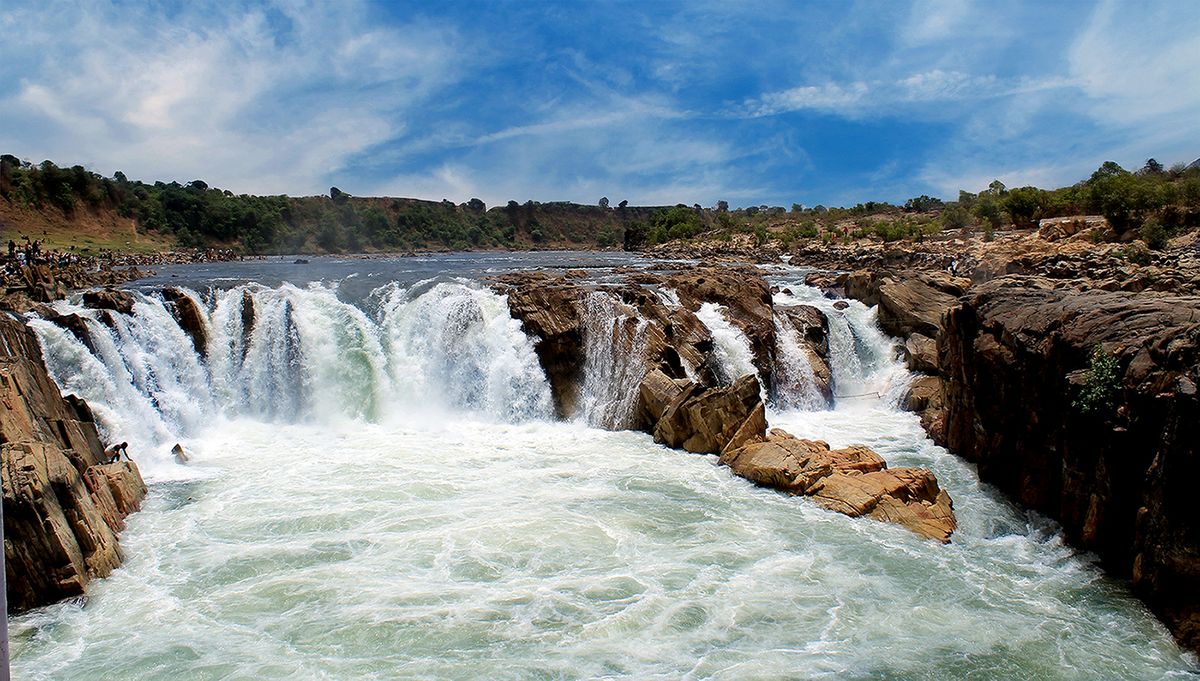
Travel to Jabalpur: History, Culture and Places of Interest
History of Jabalpur
The ancient city of Tripuri, present-day Jabalpur, is mentioned in the great Indian epic, the Mahabharata. The original inhabitants of Jabalpur were the Bhil and Gond tribes, agricultural communities that lived in the fertile Narmada Valley.
These tribal communities were gradually pushed towards the forests by the organised armies of the Marathas and later the Mughals. During British rule, forest laws gave the authorities extensive control over the forests and significantly affected the traditional lives of tribal communities.
One of the earliest kingdoms to control the territory of present-day Jabalpur and eastern Madhya Pradesh was Avanti, whose history dates back to the 3rd century BC. The region was later ruled by several dynasties, including the Sungas, Guptas and Harshas.
During the latter part of the 8th century AD, the Kalchuri dynasty made Jabalpur its capital. Later, the Gonds, who had developed considerable military skills, took control of the region during the 13th century. The Gondwana kingdom flourished in the region until the end of the 16th century.
The Gonds and Their Cultural Legacy
The Gonds were great lovers of art and worshipped Janani, the creator mother. Their culture placed great importance on fertility and the forces of nature.
They built temples and palaces decorated with sculptures and exquisite carvings. The heritage of Jabalpur and its surrounding region reflects the remarkable artistic skills of the Gond community.
Jabalpur During the Mughal and Maratha Periods
As the Mughal rulers expanded their empire towards southern India, they considered this region strategically important and attacked it several times.
The story of Rani Durgavati, the famous Gond queen, is closely associated with this period. Rani Durgavati died fighting against the forces of Mughal emperor Akbar and became one of the most important symbols of resistance in the region.
The rugged terrain made it difficult for the Mughals to maintain complete control, and the Marathas later gained control of the region through their military strategies.
In the early 19th century, the British defeated the Marathas and established their control over the region.
Jabalpur During British Rule
The region was also historically associated with the Pindaris and Thugs, groups known for raids and attacks on traders and travellers.
Colonel William Henry Sleeman, a British official based in Jabalpur, played an important role in the British campaign against the Thugs.
During British rule, Jabalpur became the capital of the Sagar and Narmada Territories and developed into an important military cantonment. Later, the city also became the headquarters of one of the divisions of the British Army.
Because of its strategic location, Jabalpur developed into an important centre for the production and supply of weapons and military equipment and also became home to ammunition factories.
Jabalpur and the Indian Independence Movement
Jabalpur played an important role in India's struggle for independence. Major national leaders such as Mahatma Gandhi, Lokmanya Tilak and Subhash Chandra Bose held important meetings and conferences in the city.
Places of Interest in Jabalpur
Jabalpur offers a diverse range of attractions, from spectacular natural landscapes and historic monuments to museums and culturally significant sites.
Marble Rocks of Bhedaghat
About 21 km from Jabalpur lies the small town of Bhedaghat, famous for its spectacular Marble Rocks along the banks of the Narmada River.
The enormous marble formations rise almost 100 metres above the river and display beautiful natural colours and patterns. During the day, sunlight highlights the brilliant white surfaces of the rocks, while at night they create a fascinating landscape under the moonlight.
One of the best ways to experience the beauty of the Marble Rocks is by taking a boat ride on the Narmada River.
Madan Mahal Fort
Situated on top of a rocky hill, the Madan Mahal Fort is an ancient fortress overlooking the landscape of Jabalpur.
The fort was built by Gond ruler Madan Shah in 1116. Although it does not feature elaborate sculptures or ornate decoration, its location and simple architecture make it one of the iconic landmarks of Jabalpur.
Rani Durgavati Memorial and Museum
The Rani Durgavati Memorial and Museum was built in 1964 as a tribute to the legendary Gond queen.
The museum houses an impressive collection of ancient sculptures and rare manuscripts. It also contains statues of gods and goddesses dating approximately from the 10th century.
A separate section of the museum is dedicated to Mahatma Gandhi, displaying photographs and portraits related to his life and his role in India's independence movement.
Tilwara Ghat
Tilwara Ghat holds a special place in modern Indian history. It is known as the place where the ashes of Mahatma Gandhi were immersed in the Narmada River.
It was also the venue of the open session of the Tripuri Congress in 1939.
How to Reach Jabalpur
By Air
Jabalpur has its own airport and receives regular flights from Delhi, Bhopal and other major Indian cities.
By Train
Jabalpur railway station is located on an important railway route connecting Mumbai and Howrah. Most trains operating on this route stop at Jabalpur.
There are also railway connections with cities including Kolkata, Bangalore, Mumbai and Delhi.
By Road
Jabalpur is well connected by road with many cities across Madhya Pradesh. Regular bus services are available, along with private operators offering luxury and semi-luxury coaches.
Plan Your Trip
Get a bespoke itinerary in 24 hours.
Need Help? We Are Here To Help You
We Can Tailor-Make a Special Itinerary For You. Contact our specialists directly.