
Rajasthan, India
Jaisalmer
Golden Forts, Desert Landscapes & Timeless Thar Experiences
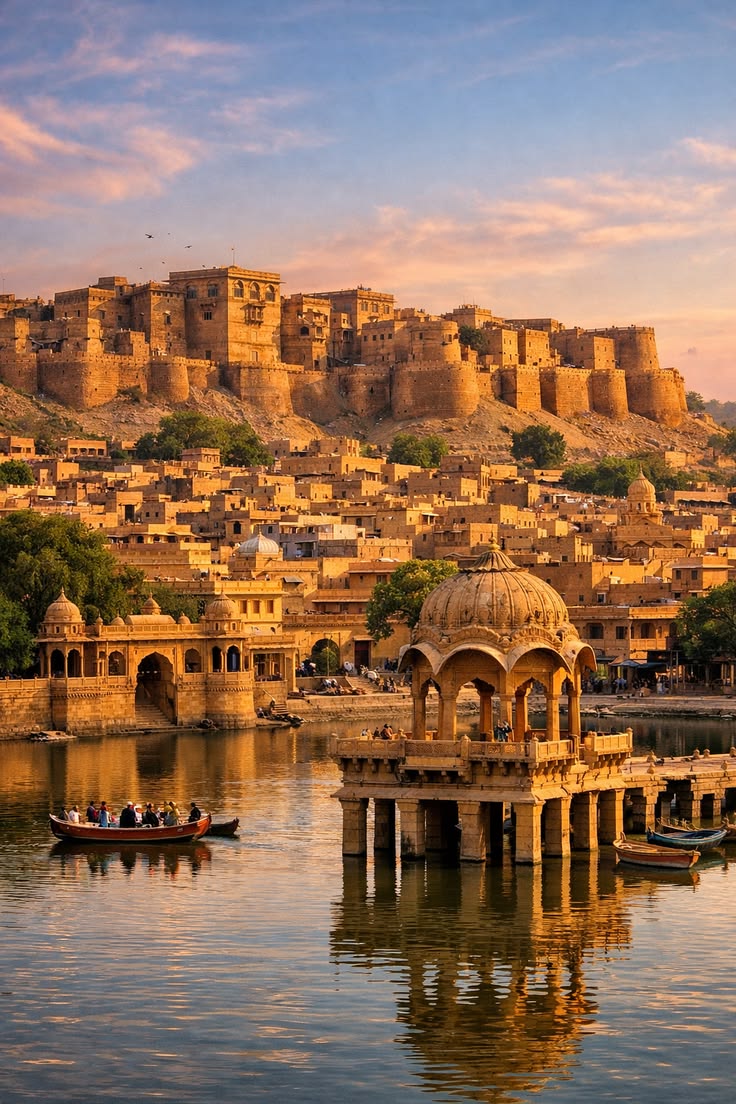
Jaisalmer, the Jewel of the Desert: History, Culture and What to See in the Golden City
Discover the History of Jaisalmer
Travelling to Jaisalmer means entering a city with a fascinating history. If you would like a tailor-made trip, contact us.
Founded in 1156 by King Rawal Jaisal, a Rajput ruler of the Bhati clan, Jaisalmer takes its name from this visionary king. Guided by a sage named Eesaal, Rawal Jaisal chose Trikuta Hill as a strategic location to build his fortress after abandoning Luderwa because of its vulnerability to attacks.
Thanks to its strategic position on the ancient trade route between India, Persia, Egypt and Africa, Jaisalmer prospered as a commercial centre. The Bhati Rajputs collected taxes from caravans passing through the city, accumulating wealth over the centuries.
Throughout its history, Jaisalmer was the scene of epic conflicts. During the 13th century, Sultan Alauddin Khilji besieged the city for nine years. The Rajput women performed the traditional jauhar to avoid capture. Nevertheless, the resistance continued. Emperor Shah Jahan recognised the bravery of the noble Sabala Simha and granted him control of the region.
Jaisalmer was also one of the last Rajput kingdoms to sign an agreement with the British government, becoming part of independent India in 1947. Today, it is one of the country's most spectacular tourist destinations.
Climate in Jaisalmer: What Is the Best Time to Visit?
Located in the heart of the Thar Desert, Jaisalmer has a desert climate, with extremely hot summers and pleasant winters. The best time to visit Jaisalmer is between November and February, when temperatures are mild. During January and February, the Desert Festival is held, offering a vibrant cultural experience that should not be missed.
The People of Jaisalmer and Their Lifestyle
The local culture of Jaisalmer is as rich as its history. Its inhabitants, more than 80% of whom live in rural areas, live with humility and hospitality in traditional villages. Houses known as jhopris, made from mud and straw, remain cool in summer and warm in winter.
The rural economy revolves around livestock and agriculture. The main crops are bajra and gawar, while livestock includes cows, camels, sheep and goats. The traditional diet is based on chapatis, milk, dairy products and desert vegetables.
Desert folk music, influenced by the Sindh region of Pakistan, is an essential part of the local cultural identity. Jaisalmer keeps its Rajasthani heritage alive through its music, dances and customs.
Where to Go Shopping in Jaisalmer
Jaisalmer is a paradise for handicraft shopping. Traditional bazaars offer unique products such as:
- Mirror-embroidered textiles
- Pashmina and pattu wool shawls
- Tapestries and carpets made from camel hair
- Antiques, silver jewellery and carved wooden objects
- Lamps, souvenirs and Khadi products
Recommended shopping areas:
- Sadar Bazar
- Manak Chowk (the main market)
- Sonaron ka Bas
- Pansari Bazar
- Khadi Gramodyog Bhawan
- Rajasthali (government shop)
One notable shop inside the fort is Light of the East, specialising in rare minerals and crystals.
Traditional Cuisine of Jaisalmer
Food in Jaisalmer is traditionally Rajasthani: flavourful, spicy and authentic. The city is particularly known for vegetarian dishes prepared using local ingredients and traditional techniques.
Traditional dishes of Jaisalmer:
- Ker Sangri: a dry dish made with desert berries and beans, slowly cooked with spices and served with bajra roti.
- Kadi Pakora: a light preparation of yoghurt and chickpea flour with fried fritters, perfect with chapati.
- Bhanon Aloo: potatoes stuffed with mint and served in a thick gravy.
- Murgh-e-Subz: chicken with vegetables in a rich, juicy sauce, ideal for those who prefer non-vegetarian options.
Local restaurants offer authentic, home-style versions of these dishes.
How to Reach Jaisalmer
By Air: Jaisalmer has an airport only 5 km from the city centre, although there are currently no regular commercial flights. The best option by air is to fly to Jodhpur and continue by train or car.
By Train: Jaisalmer is connected to Jodhpur, Jaipur, Delhi, Agra and Mumbai. It is a comfortable and economical way to reach the city.
By Road: There is a good network of buses and taxis from Jodhpur, Bikaner and Jaipur. A private car with driver can also be hired for greater comfort.
Recommended Hotels in Jaisalmer
For an unforgettable experience, we recommend the following accommodations:
- Surya Garh Jaisalmer (luxury and elegance)
- Taj Gateway Hotel
- Gorbandh Palace
- Deoki Niwas Palace
- Fort Rajwada
- Hotel Rangmahal
- Mandir Palace
- Hotel Narain Niwas
- Rawal Hotel
- Lal Niwas
- Rajwansh Resort
Many of these properties are located in historic havelis or offer spectacular views of Jaisalmer Fort.
Why Travel to Jaisalmer?
Jaisalmer is not just a city; it is an experience. Its golden architecture, medieval streets, hospitality and desert culture make it one of the most magical destinations in India.
Travelling to Jaisalmer means discovering a unique part of Rajasthan, where time seems to have stood still among forts, dunes and melodies of the desert.
Plan Your Trip
Get a bespoke itinerary in 24 hours.
Need Help? We Are Here To Help You
We Can Tailor-Make a Special Itinerary For You. Contact our specialists directly.